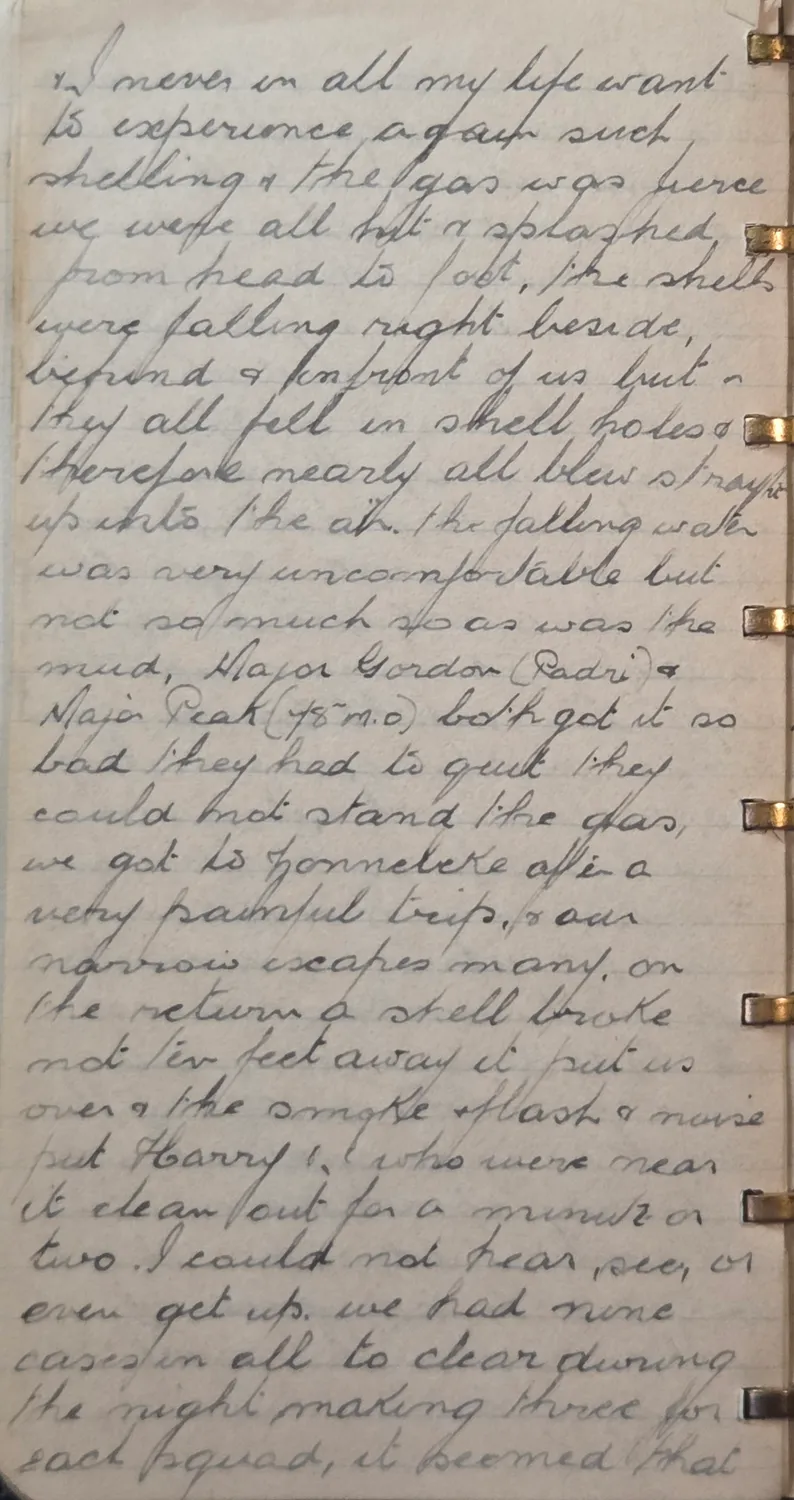
- I never in all my life want to experience again such shelling + the gas was fierce we were all hit + splashed, from head to foot, the shells were falling right beside, behind + in front of us but + they all fell in shell holes + therefore nearly all blew straight up into the air. the falling water was very uncomfortable but not so much so as was the mud, Major Gordon (Padre) + Major Peak (78 m.o) both got it so bad they had to quit they could not stand the gas, we got to Zonnebeke after a very painful trip, + our narrow escapes many. on the return a shell broke not ten feet away it put us over + the smoke + flash + noise put Harry & I who were near it clean out for a minute or two. I could not hear, see, or even get up. we had nine cases in all to clear during the night making three for each squad, it seemed that
▸ Where was he?
▸ The war at this time
Chemical warfare at Ypres
Germany uses mustard gas extensively at Passchendaele. Unlike chlorine or phosgene, mustard gas is a persistent blister agent: it contaminates the ground for days, burns exposed skin, and causes temporary blindness. Gas masks protect the lungs but not the body. Shells containing mustard gas are mixed with high explosive, making every bombardment a dual threat. The gas collects in shell craters and low ground, turning the flooded battlefield into a toxic hazard even between bombardments.