← Previous

Monday, June 4, 1917

Page 105
Next →

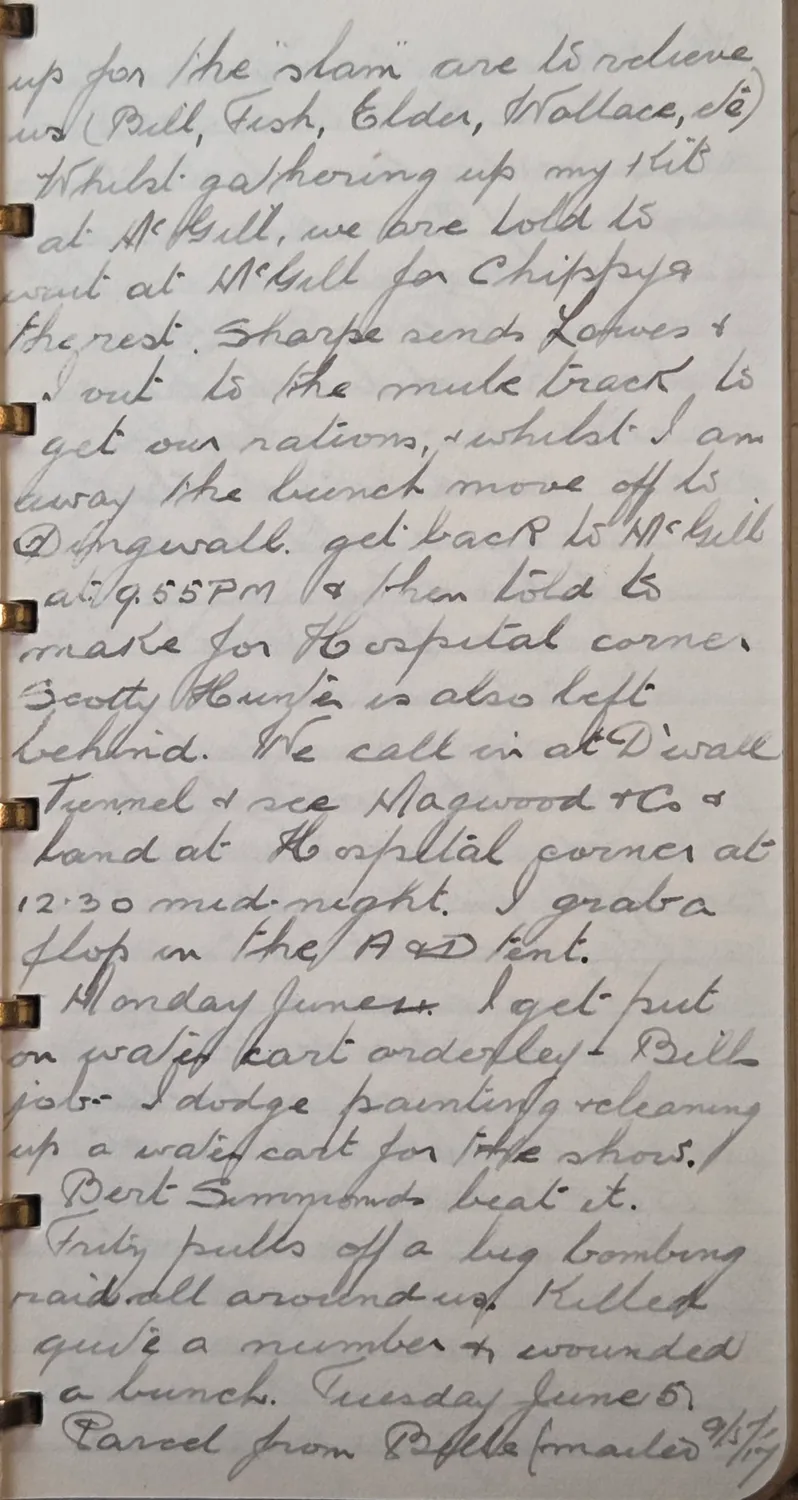
up for the slam are to relieve us (Bill, Tish, Elder, Wallace, etc) Whilst gathering up my kit at McGill, we are told to wait at McGill for Chippy + the rest. Sharpe sends Lowes + I out to the mule track to get our rations, + whilst I am away the bunch move off to Dingwall. get back to McGill at 9:55 PM + then told to make for Hospital corner. Scotty Huntir is also left behind. We call in at D’wall tunnel + see Magwood + Co + land at Hospital corner at 12:30 mid-night. I grab a flop in the A + D tent.

Monday June 4. I get put on water cart orderly - Bill’s job - I dodge painting + cleaning up a water cart for the show. Bert Simmonds beat it.

Fritz pulls off a big bombing raid all around us. Killed quite a number + wounded a bunch. Tuesday June 5. Parcel from Belle (mailed 9/5/17)
Where was he?
The war at this time

German bombing raids on rear areas

By mid-1917, the German air service (the Luftstreitkrafte) had intensified its bombing campaign against rear areas behind the British front. While much attention has been given to the fighter war over the trenches, the strategic bombing of supply lines, billets, medical positions, and encampments was a growing feature of the air war. German aircraft, including the new Gotha heavy bombers and smaller tactical bombers, conducted night raids with increasing frequency and effectiveness, targeting the infrastructure that sustained front-line operations. These raids on rear areas were particularly demoralizing because they struck troops and support personnel who expected to be relatively safe. Aid posts, horse lines, ammunition dumps, and rest camps were all targets. The raids exploited the fact that anti-aircraft defenses behind the lines were often thin, and night interception of bombers was still rudimentary. Casualties from these raids, while smaller in scale than those from front-line fighting, were felt sharply in units already worn down by recent combat. The Lens sector saw considerable German air activity during this period. Canadian units in the Vimy-Lens area were still recovering from the costly La Coulette attack and conducting ongoing operations to maintain pressure on the German defenses around Lens. Medical relay points like Hospital Corner (where stretcher bearers handed off casualties to ambulance vehicles) were particularly vulnerable, as they were fixed positions that the Germans could identify and target from the air.