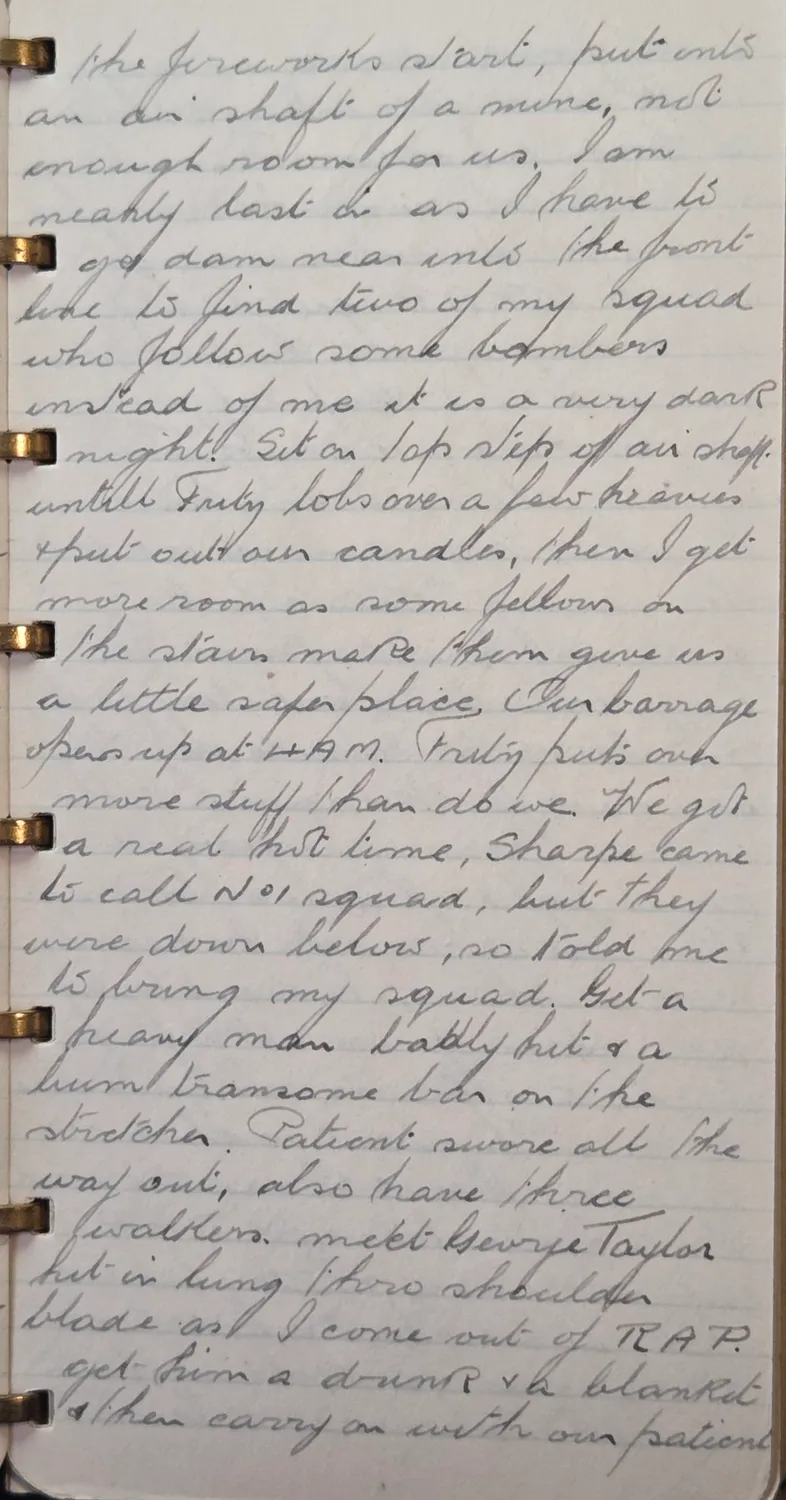
the fireworks start, put into an air shaft of a mine, not enough room for us. I am nearly last in as I have to go dam near into the front line to find two of my squad who follow some bombers instead of me it is a very dark night! Sit on top step of air shaft until Fritz lobs over a few heavies & put out our candles, then I get more room as some fellows on the stairs make them give us a little safer place. Our barrage opens up at 4:45 A.M. Fritz puts out more stuff than do we. We get a real hot time, Sharpe came to call No 1 squad, but they were down below, so told me to bring my squad. Get a heavy man badly hit & a Hun transome bar on the stretcher. Patient swore all the way out, also have three walkers. meet George Taylor hit in lung thro shoulder blade as I come out of R.A.P get him a drink & a blanket & then carry on with our patient
▸ Where was he?
▸ The war at this time
Vimy Ridge tunnel system
By March 1917, the tunnel system under Vimy Ridge had grown into an extensive underground network. British and Canadian tunnelling companies had excavated subways, communication tunnels, and mine galleries that allowed troops and supplies to move forward under cover. Some tunnels contained electric lighting, water pipes, and narrow-gauge railway tracks. Air shafts provided ventilation but were vulnerable to shellfire at the surface. These tunnels served multiple purposes during raids. Stretcher-bearer squads staged in tunnel entrances near the front line, ready to move out as soon as casualties began arriving. The tunnels offered protection from shellfire during the waiting period, though they were cramped and could become death traps if an entrance was collapsed by a direct hit. On the night of a raid, the tunnel openings became bottlenecks as raiders returned with prisoners and wounded while stretcher parties tried to move outward.