← Previous

Wednesday, October 11, 1916

Page 27
Next →

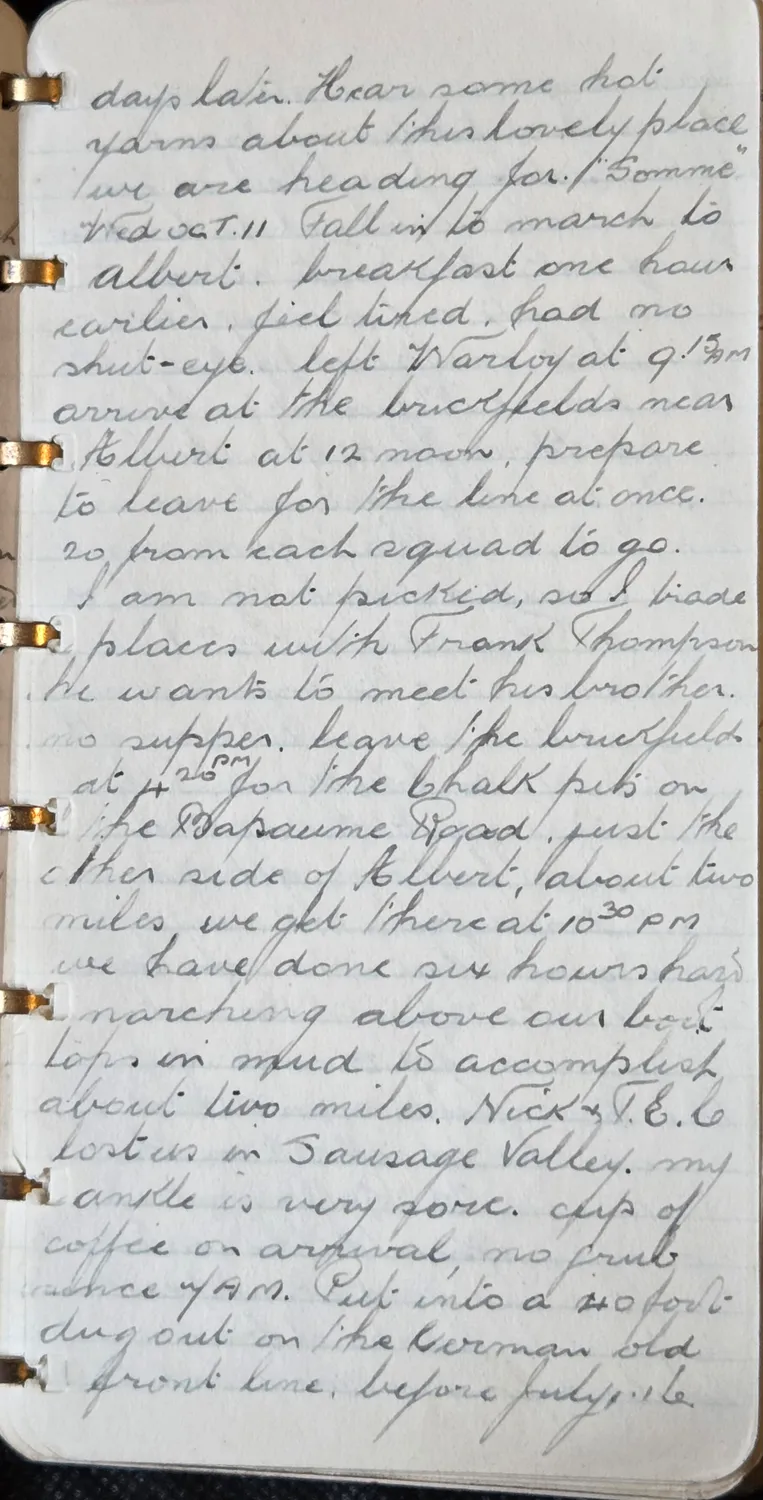
days later. Hear some hot yarns about this lovely place we are heading for. “Somme” Wed OCT. 11 Fall in to march to Albert. breakfast one hour earlier. feel tired. had no shut-eye. left Warloy at 9.15 AM arrive at the brickfields near Albert at 12 noon, prepare to leave for the line at once. 20 from each squad to go.

I am not picked, so I trade places with Frank Thompson he wants to meet his brother. no supper. leave the brickfields at 4.30 PM for the Chalk pits on the Bapaume Road. just the other side of Albert, about two miles, we get there at 10.30 PM we have done six hours hard marching above our boot tops in mud to accomplish about two miles. Nick & T.E.C lost us in Sausage Valley. my ankle is very sore. cup of coffee on arrival no grub since 9 AM. Put into a 40 foot dug out on the German old front line, before July 16
Where was he?
The war at this time

The Somme battlefield

Three months of fighting have turned the Somme into a wasteland. The German front line of July 1 is now several miles behind the current positions. Every yard has been fought over, shelled, fought over again. The villages (Pozières, Courcelette, Thiepval) are rubble. German dugout construction on the Somme exploited the region's deep chalk geology. German engineers had spent two years mining straight down through soft chalk to depths of 30 to 40 feet, then carving lateral chambers reinforced with timber frames and sometimes lined with planking or wallboard. Many had multiple entrances, electric lighting powered by generators, and ventilation shafts. The chalk was easy to excavate but structurally sound once cut, and at sufficient depth it could withstand all but a direct hit from the heaviest shells. British doctrine before the Somme had favoured shallower trenches on the theory that deep dugouts made men reluctant to come up and fight, a decision that contributed heavily to the casualties of July 1.